
You are using an out of date browser. It may not display this or other websites correctly.
You should upgrade or use an alternative browser.
You should upgrade or use an alternative browser.
1198S Wheels repaint
- Thread starter Mac999
- Start date


rockjock620
New member
I know a man who can but not close to you.

dseered
New member
Want to get my 1198S wheels painted to the 1098R gold colour. From Glasgow buying from Ducati Glasgow...anywhere nearby who does a top job ??:dunno:
I am sure one of the guys at DG will be able to help out ?


Neepdocker
Well-known member
think the powder coaters are called ESP or sumat like that ask D/G they work with em alot
Since you're bike is so new I would't powder coat them.It's kinda terminal,involves shot blasting the wheels,once It's done It's done.


bobsyeruncle
Well-known member
DG is Ducati Glasgow, Martin is the owner!!!
I
iang27
Just visiting
Here is the correct Ducati paint codes and instructions taken from another site,
First off let me say one thing. There are at present only 2 sources of the correct paint. One is Colorrite in the US and the other is Palini in Italy. I cannot vouch for Colorrite's product or how good a match it is for the OEM paint so I will for now discount it. It is after all a copy of Palini's product, albeit an accurate one.
I decided the only way I was going to safely achieve a perfect match was to source the OEM paint used on the R and TC wheels, frame and tank, from the very people that supply Ducati themselves...Palini Vernici Srl
A few calls to Ducati revealed the full paint code was Palini D928 353. In actual fact D353 is the only element Palini use for reference. The paint I subsequently found out is called "Ducati Racing Gold Metallic". Beyond this point Ducati were not much help. As I am fortunate enought to speak fluent Italian, I decided to contact Palini directly. Turns out the paint must be applied using a black etch primer, followed by the gold top coat, then a clear laquer applied over that. The paint is also ONLY available as a "2 pac" or solvent based mix, due to the various tints in the gold and the chromate tints added in, which give the gold a silvery element. This limitation creates a few problems which I will explain shortly.
Palini have a list of distributors around the world from whom you could get your local paint shop to aquire the paint. You will need to ask them for the one closest to you if there is not one in your own country. Their distributors generally do not deal with the public direct. The distributors need to request the formula for the paint code "D353" direct from Palini in Italy, which will then allow them to mix the paint up and send it on to your chosen paintshop. 1 litre ought to suffice for two wheels.
With regards the problems of solvent based paints, I cannot speak for other countries but here in the UK, very few paint shops will work with 2 pac paints anymore (due to their carcenogenic properties) or even cellulose based paints. It is nearly all water based paint these days. Health & Safety regulations prevent it. If like me you manage to find someone who is prepared to spray 2 pac paint, then they will have to order the paint from your national Palini distributor (if you have one), as I explained before.
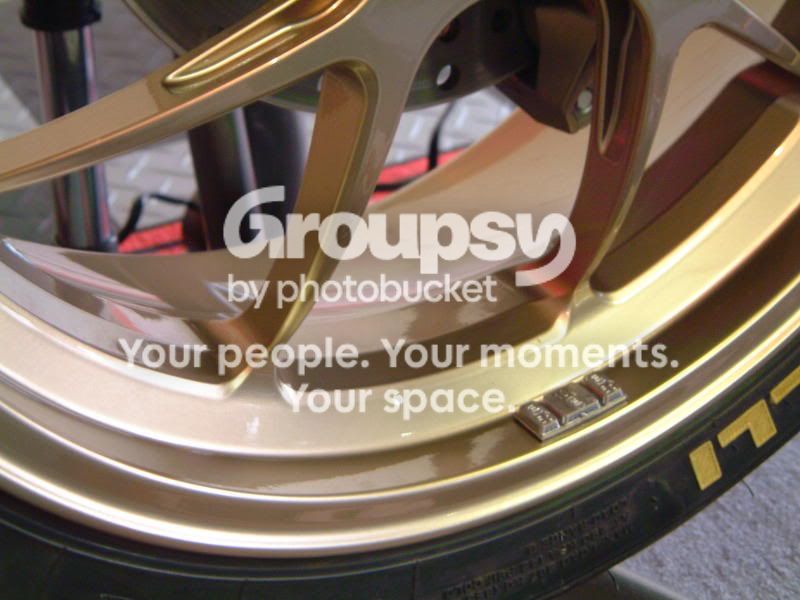
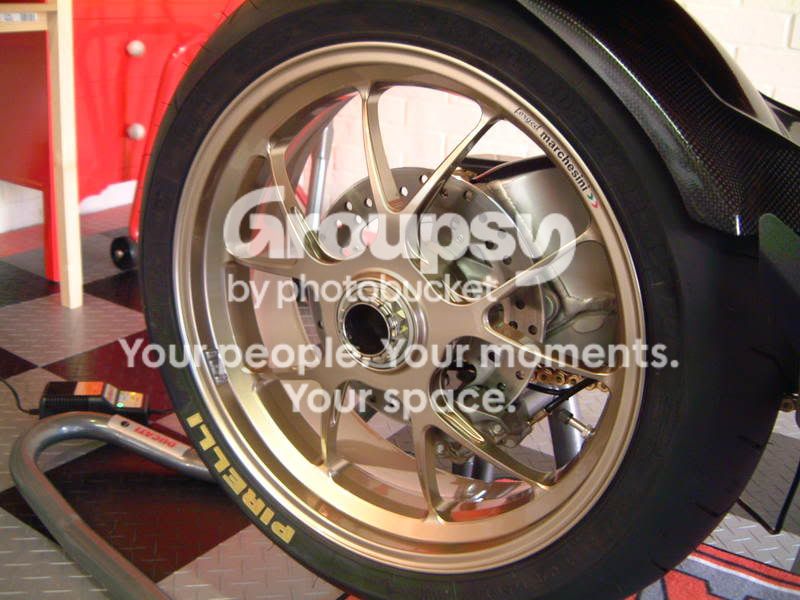
A word about the paint itself. Firstly it is expensive at £160 a litre and it is also extremely runny and thin. Because of this it is likely your paintshop is going to have to apply several coats of gold over the etch primer base coat to achieve the right colour. My painter made up (at the suggestion of Palini) several alloy test swatches, which he then checked against the wheels on both a TC and an R in my local dealer's showroom for a perfect match. Since the wheels on the base and S models are black, you might get away with Scotchbriting them as opposed to stripping them back completely, to give the gold paint a key. I had mine taken back to the bare alloy and a black etch primer put on first (again as Palini recommended), just to be certain. Seemed a bit pointless cutting corners when I had gone to these extremes to get the paint. It made the colour matching process much much easier in the long run, as the swatches were then a like for like comparison with my wheels. All that was changed was the number of coats of gold and clear coat to achieve the correct shade. All in all the wheels cost me £310 including the paint, which is way way cheaper than buying a set of TC or R wheels. As explained on my project thread elsewhere on this forum, regrettably my digital camera has gone AWOL else I would post up pics of the end results. As soon as I find it or I can get my hands on one I will get something up on the forum. All I can say is that you cannot tell the difference between these wheels and those on a R or TC, which ultimately is the effect you are trying to achieve.




Topolino
Member
Exactly the look and 'feel' I want where did you get them done ( contact ) and if you dont mind, approx how much for this piece of art ?
I had them painted locally by a small paintshop. I ordered the Palini paint as described in the extract that IanG quoted and he used a litre of paint, since it is very very thin and required quite a few coats. Total cost was around £340 including the paint. If you want his number then PM me.
TBH providing you can find a local paintshop, who can order through Palini's distributor in the UK, then the only problem you will need to overcome is ensuring that the paintshop is prepared to use 2 pack paint, as fewer and fewer are these days. I am sure DG know of a local company who would do it for you. The Palini distributors in the UK are in Warrington.....
PARRYS MOTOR PARTS LTD
Steve Chatterley
The Colour Centre
Wash Lane
Warrington
Cheshire
WA4 2RS
Telephone: 01925 633733/633227
Fax: 01925 639657
admin@parrysgroup.co.uk
You will have to get your chosen paintshop to order the specific paint from them using the formula Parry's have for this colour. Using this formula Parry's will then mix the paint and send the paintshop the quantity required. Halfords can also mix up Palini paint codes themselves using the "Palinal" system, but only in cellulose and this colour is only available from Palini in 2 pack, because of the chromate tints in it apparently, or at least so Palini told me when I phoned them in Italy. I hope this answers your question.
Last edited:

Freak
Is it still summer?
I was about to comment that any paint shop should be able to match the colour as one of my closest friends does this for a living, currently painting GSE's bikes (now Yamaha... cough) since they've been back in BSB let alone numerous other race teams.
Funny thing is he's based in Warrington and I know he gets his paint from the place above.... d'oh!
Funny thing is he's based in Warrington and I know he gets his paint from the place above.... d'oh!