
Coolant in spark plug channel

West Cork Paul

Man in a Shed
Subscriber
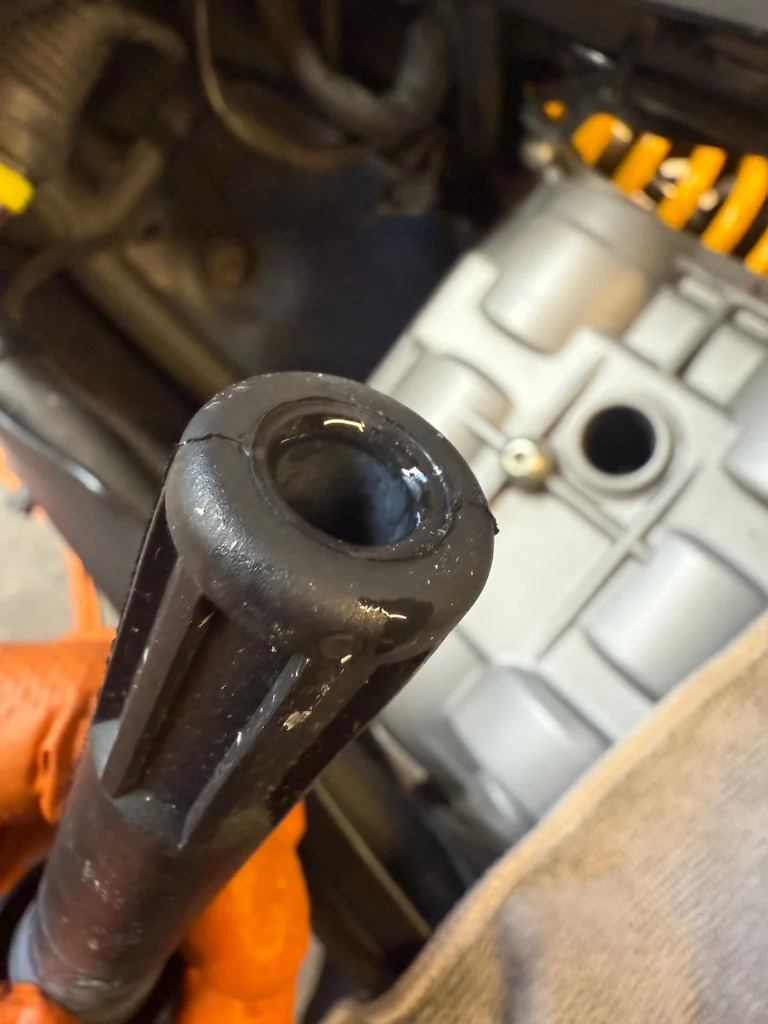
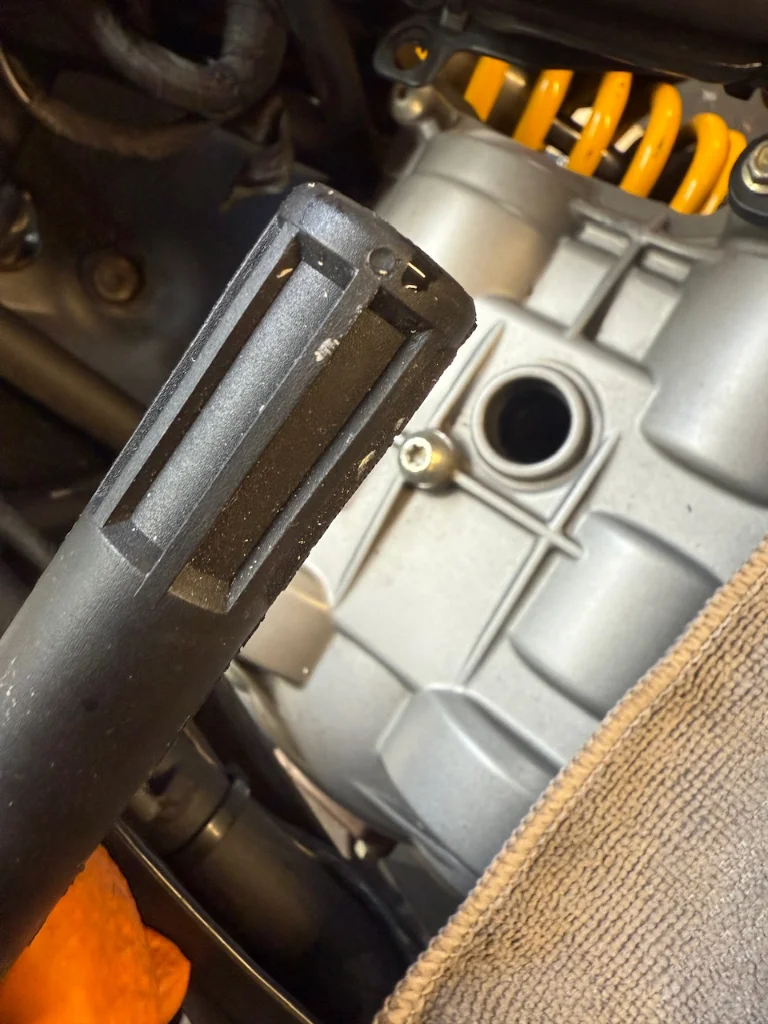
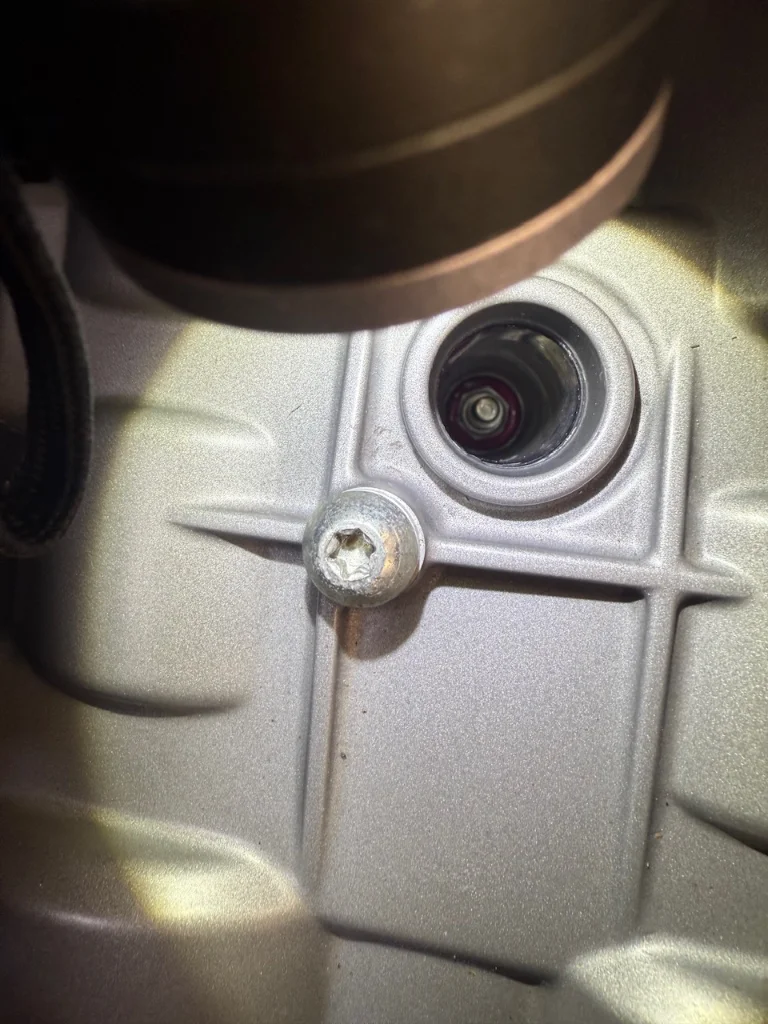
Here’s a novel one. 2015 Panigale 899, 12200 miles, same owner since the bike was bought when it was 6months old. The owner has reported coolant keeps getting into the spark plug channel on the vertical cylinder. You can see the wet marks on what was a bone dry, and clean, plug cap plus if you zoom in on shot down the channel/hole you’ll see the pink coolant collecting around the spark plug.
IMG_1431.webp
IMG_1430.webp
IMG_1432.webp


How can that be?

I’m struggling to understand how coolant can get there, other than be getting into the combustion chamber, not being burned off, but being forced up and around the spark plug threads - a tall theory perhaps, but read on.

The bike also has either a faulty thermostat (Squirter unit as Ducati call it on that bike) or a failed water pump - due perhaps to the plastic drive wheel having lost all its teeth. This is evidenced by the engine temp rising, the fan coming on at 105c as it should but the temp keeps rising until at 120c I switched it off. Both rads were only just above ambient air temp at 27c.

And, judging by the oil window there’s coolant mixed with the oil.

IMG_1429.webp


So, I’m thinking, blown head gasket.

I’m also thinking running an excessively hot engine (he uses this as a track bike and it was news to him when I informed him its overheating, but I guess he’s focused on the track ahead not the flashing HI on the dash) has caused the head gasket failure but would that explain the coolant in the plug channel ?
 
Here’s a novel one. 2015 Panigale 899, 12200 miles, same owner since the bike was bought when it was 6months old. The owner has reported coolant keeps getting into the spark plug channel on the vertical cylinder. You can see the wet marks on what was a bone dry, and clean, plug cap plus if you zoom in on shot down the channel/hole you’ll see the pink coolant collecting around the spark plug.
View attachment 143161View attachment 143162View attachment 143163

How can that be?

I’m struggling to understand how coolant can get there, other than be getting into the combustion chamber, not being burned off, but being forced up and around the spark plug threads - a tall theory perhaps, but read on.

The bike also has either a faulty thermostat (Squirter unit as Ducati call it on that bike) or a failed water pump - due perhaps to the plastic drive wheel having lost all its teeth. This is evidenced by the engine temp rising, the fan coming on at 105c as it should but the temp keeps rising until at 120c I switched it off. Both rads were only just above ambient air temp at 27c.

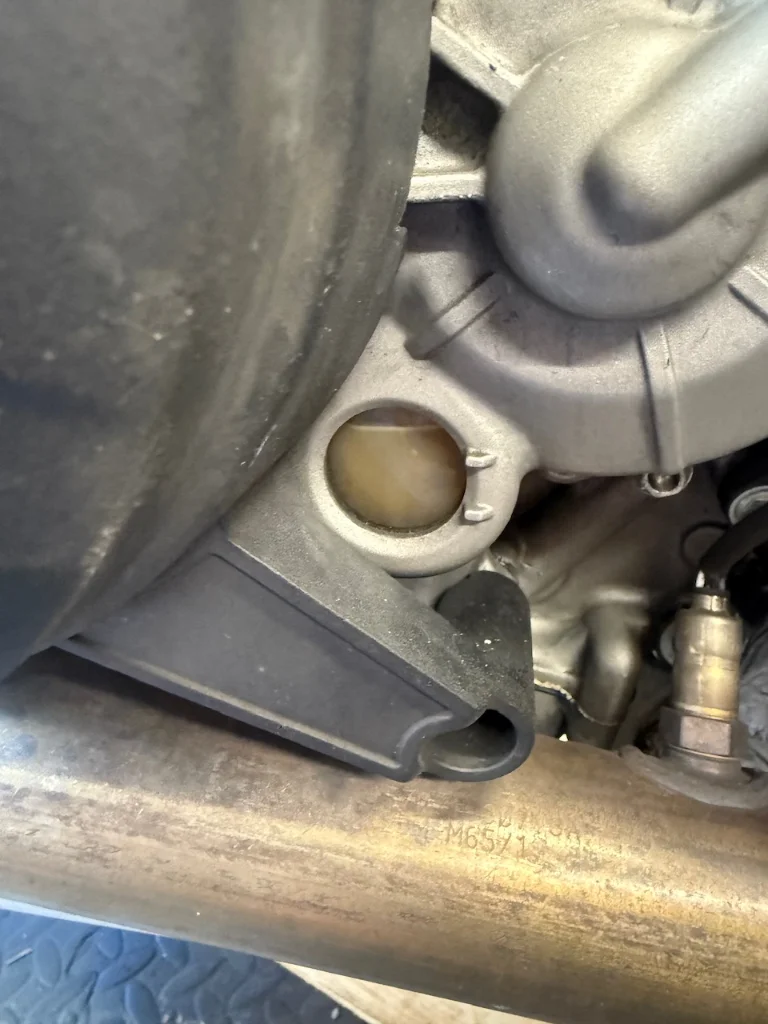
And, judging by the oil window there’s coolant mixed with the oil.
View attachment 143164

So, I’m thinking, blown head gasket.

I’m also thinking running an excessively hot engine (he uses this as a track bike and it was news to him when I informed him its overheating, but I guess he’s focused on the track ahead not the flashing HI on the dash) has caused the head gasket failure but would that explain the coolant in the plug channel ?
Head gasket failure.
Very hot temperature. .. vaporised water/coolant in rocker cover area escaping into spark plug channel.....

Walk away...
 
I would also check the heads to see if that kind of excessive heat has not caused microscopic cracks in the head. Aluminimum expands with heat and different parts of the head got much hotter than other parts if there is no cooling taking place. I am suprised that the hoses did not fail with excessive pressure.
 
Not knowing the layout, you haven't got any coolant hoses running above that one cylinder have you, just to rule out any small possiblilty of a small leaking hose dripping? I know it's unlikely as there appears to be no run lines down the shaft wall

Agree with what the knowledgeable people said :D. If it's not able to get there from the outside then it's getting there from the inside, is the only option.
 
Last edited:
Head gasket failure.
Very hot temperature. .. vaporised water/coolant in rocker cover area escaping into spark plug channel.....

Walk away...

Sunk cost theory applies here.... walk away.

I have started using ChatGPT to see if it is capable of diagnosing issues. Here is what it came up with.

I think this part of ChatGPT’s response is where the issue is.

There’s nothing above that could drip or leak down into there.

The valve train cover will be coming off on Monday and I expect to find emulsified oil/coolant in there.

I do think the head gasket has blown and There could possibly be a crack in the head itself.

I’ll be doing a compression test Monday too, then relaying the news and the costs to fix to the owner.

Thanks all for your input.

I’ll not be walking away from it, although he may want to take it away and do the work himself, save about €1000 in labour.
 
Has it been neglected?
Outwardly it’s in very good condition. He’s owned it since it was 6 months old. It’s used as a track bike mostly, no mirrors, no indicators, not registered here (it’s a UK bike) etc. I suspect the issue arose because the squirter unit failed and stays in the shut position, the coolant can’t circulate to the rads to get cooled, the engine overheats and bang.

I can well imagine that thrashing it around a track he’s not had his eye on the temp gauge in the dash flashing HI at him.
 
Let him source it and you fit it ... he pays the labour and he takes the risk 👀
The more I think about it the more I’m minded (assuming it transpires as I suspect it will) to give him the bad news, charge him a couple of hours labour for assessing it and let him take it away to do himself, he’s not averse to using a spanner. I’d have to give some form of warranty with my work even if he sourced the head.
 
Outwardly it’s in very good condition. He’s owned it since it was 6 months old. It’s used as a track bike mostly, no mirrors, no indicators, not registered here (it’s a UK bike) etc. I suspect the issue arose because the squirter unit failed and stays in the shut position, the coolant can’t circulate to the rads to get cooled, the engine overheats and bang.

I can well imagine that thrashing it around a track he’s not had his eye on the temp gauge in the dash flashing HI at him.
If he's Irish the timing chain could be eating the swing arm and they won't stop .... all my mates who are track day legends are completely devoid of mechanical sympathy..👀
 
I've recently fault found a £459k 11 year old installation.
The manufacturer confirmed my diagnosis and the £52k suggested route to restore functionality.
The customer has take my report and suggested a £28k route ... however they won't accept that it may fail immediately..or even duringthe repair.... this sounds amazingly similar
 
A suggestion from the other side

“ I'm thinking you will find a crack into the coolant chamber at the top of the spark plug hole and one going into the bottom of the valve area. Hope I'm wrong”

I suspect he’s spot on and that would explain everything.

A theory:
The thermostat is faulty, stuck in its closed position.

The coolant around the engine can’t get past the thermostat, to the hoses and to the rads to get cooled.

It gets heated by the engine.

It expands.

It now forces its way, under pressure, through a microscopic crack and exits both in the spark plug chamber, hence the crystal clear coolant which collects there (albeit in small amounts), and exits into the valve train area where it mixes with the engine oil causing the milky, cloudy, appearance of the oil in the sight glass.


That all sounds plausible - yes?


Which then begs the question, is the crack in the head a consequence of massive coolant pressure build up therein as the coolant heats and expands, or was the head cracked and the faulty thermostat has brought it to light?

The coolant is incompressible so as it expanded with heat, and especially if it reached its boiling point (135c) I can well believe the pressure in the coolant jacket area above the piston was massive, but enough to fracture the metal casting? One would think the plastic thermostat housing or the joints where that is connected to the V & H heads would give way first.
Surely the radiator cap would lift/discharge before thet event?
 
Surely the radiator cap would lift/discharge before thet event?
Not if the thermostat is stuck in the closed position, no coolant can get to the rads.

When I tested it the engine reaches an indicated temp of 105c, the rad fan comes on yet the indicated temp keeps rising to 120 and higher. The rad temps were only 27-28c, the ambient temp was 24c. No hot coolant is going through the rads.

Bear in mind the sensor measuring the temperature is inserted into the thermostat housing but on the radiator side of the thermostat. I’d wager therefore the actual engine temperature is much higher than indicated and the temp sensor is recording the temp as it’s radiated through the thermostat body housing not the coolant temp in the engine itself.

This also explains why, if the rad cap is removed the radiators appear full of coolant.

As I think about this it’s highly likely the coolant in the engine is boiling, the gaseous vapours are escaping through the microscopic crack in the head and condensing where they exit into the spark plug chamber and the valve train/camshaft area.
 
I think the head has a crack @West Cork Paul

I can't see coolant getting down into the plug hole from anywhere. It can't pass up through the plug threads, as fuel and exhaust gasses would be doing this. Plus why would it be in the cylinder anyway?

With the milky oil, I'd have said a simple head gasket failure, but the coolant in the spark plug channel makes me think it's more serious. I think the gasket will have failed as well btw.

As for the way forward. Give the guy the report and charge him for your time so far. Let him make the decision from there.
Is it possible for coolant to drip onto the cylinder head if there was a leak somewhere else in the cooling system and collect in the plug tunnel?
I had a 990 KTM that had coolant pooling on top of the water pump housing. I assumed the pump gasket must be leaking but it was a hose joint where the fluid was coming from and just gathering on top of the water pump.
As the oil has emulsified it suggests a head gasket leak. It's a deep tunnel. Is it intersected by the head gasket? If there's a head bolt tunnel near the plug well and the thin outer section of the gasket has failed around that bolt hole clean coolant would leak out.
Worst case, there's a crack in the casting puncturing the water jacket.
 
If he's Irish the timing chain could be eating the swing arm and they won't stop .... all my mates who are track day legends are completely devoid of mechanical sympathy..👀

He’s English 😕

They're the worst, Mock paddies( or as we call them in Essex, "the people to the right of the A12" :D).

No matter what you do he'll feck it up again and blame it on "The english mechanic out of Cork" despite him being english. It never ceases to amaze me just how many (not all) track day hero's think track bikes need less attention than if it's used for it's original road use.

Don't get me wrong, if you want a track bike to thrash the tits out of it then have at it, it's great fun. But, if your mechanical skill set is non existent, then you will have some hefty bills to keep the thing properly maintained, running and repaired.

Bill him the hours used to inspect/identify then suggest if he is to continue using it as a track bike and for some time, it might be in his interest to send it to a race engine builder who might also be able to offer some recognised upgrades that might help the engine perform well and last longer.
 
Last edited:
I had a gpz600r that would drip a couple of drops of coolant after a ride. I assumed to start withnit was from the expansion bottle overflow but a more diligent insp showed it coming from the airbox drain pipe. I had a look inside the airbox and there was beads of coolant rolling about in the bottom. Turns out, it was a leaky water pump seal. Leaking thru into the motor where it was then evaporating off and up thru the engine breather setup, then recondensing into coolant with no traces of oil. Took me a while to work that out as I could get my thinking away from a cracked block or head gasket leak.
 
Is it possible for coolant to drip onto the cylinder head if there was a leak somewhere else in the cooling system and collect in the plug tunnel?
I had a 990 KTM that had coolant pooling on top of the water pump housing. I assumed the pump gasket must be leaking but it was a hose joint where the fluid was coming from and just gathering on top of the water pump.
As the oil has emulsified it suggests a head gasket leak. It's a deep tunnel. Is it intersected by the head gasket? If there's a head bolt tunnel near the plug well and the thin outer section of the gasket has failed around that bolt hole clean coolant would leak out.
Worst case, there's a crack in the casting puncturing the water jacket.
There are no coolant hoses above the head gasket level so certainly nothing above to drip down onto the spark plug hole.

The red circle areas in these photos are where coolant enters/exits the head area on the LHS and front of the cylinder head. The top of the plug chamber can be seen in the top centre of the photo. It can also be seen the head gasket area is below the electrodes of the plug.

IMG_1443.webp
IMG_1442.webp


I am strongly suspecting there’s a crack in the coolant jacket which is at the bottom of the cylinder head, surrounding valve and plug area and that crack runs all the way from the plug chamber wall into the camshaft area.
 
Back
Top Bottom